
What is the difference between Monthly Rent / Wolse and Jeonse in Korea?
Korea has two main types of housing leases: Jeonse (전세) and Wolse (월세). Understanding the difference is essential when choosing your new home in Seoul.
1, What Is Jeonse (전세)?
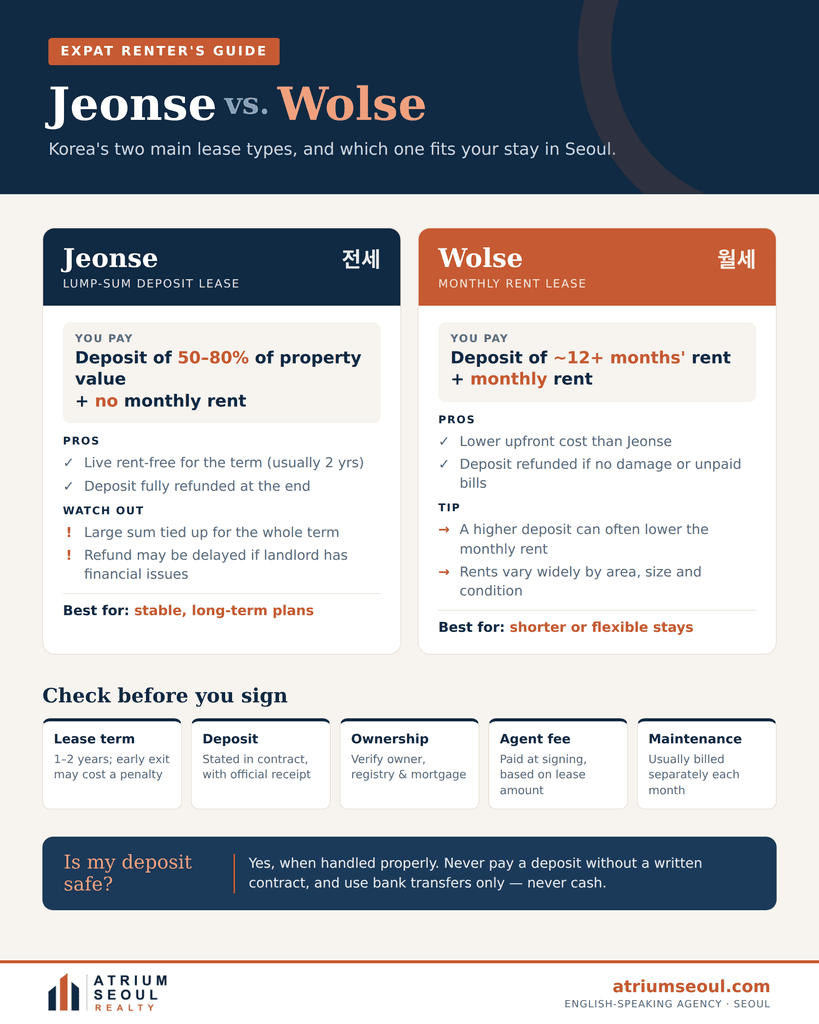
Jeonse is a unique long-term lease system in which the tenant pays a large lump-sum deposit—usually 50% to 80% of the property’s market value—instead of monthly rent.
The tenant can live in the property rent-free for the duration of the lease (typically 2 years), and the entire deposit is refunded at the end of the contract, assuming no damages or unpaid fees.
✓ Key Points:
- No monthly rent during the lease period
- High upfront deposit required
- Deposit is fully refundable at the end of the contract
- Ideal for stable, long-term housing plans
✓ Potential Drawbacks:
- Your money is tied up during the contract period
- The deposit may not be returned immediately if the landlord lacks liquidity or has financial issues
- Less flexibility if your plans change mid-lease
2.What Is Wolse (월세)?
Wolse refers to Korea’s monthly rental system. Tenants pay both a deposit (often equivalent to 12 months or more of rent) and monthly rent. In Seoul, monthly rents can be relatively high, especially in central areas or for modern apartments.
✓ Key Points:
- Requires both a deposit and monthly rent
- Deposit is refundable at the end of the contract if there is no damage or unpaid bills
- Suitable for shorter-term stays or flexible plans
- Rent and deposit amounts vary widely by location, size, and property condition
- Deposit may still be partially negotiable (A higher deposit can often reduce the monthly rent)
3. Key Things to Know Before Signing
- Lease Term : Standard contract is 1 or 2 years. Early termination may incur penalties.
- Key Money : Always request an official receipt and ensure the deposit is clearly stated in the contract.
- Property Verification : Confirm the landlord is the legal owner, and check the property’s registration and mortgage status.
- Agent Fees : A real estate fee is charged upon contract signing, based on the lease amount.
- Maintenance Fees : Usually paid separately and may include building management, cleaning, and security, etc.
⚠️ Is My Deposit Safe?
Yes—when handled properly. At Atrium Seoul Realty, we prioritize your financial safety.
We:
- Verify the landlord’s legal ownership of the property
- Use official contracts in both English and Korean
- Check the property registration and mortgage status
- Avoid risky cash transactions and ensure all payments are properly documented
- Advise and assist with legal safety measures
🚨 Final Advice for Expats
- Always work with a licensed and experienced real estate agent
- Get advise legal safety measures
- Never pay a deposit without a written contract
- Understand that both Jeonse and Wolse require substantial deposits—especially in high-demand areas like Seoul
🔸Looking for an alternative to high deposits?Looking for an alternative to high deposits?
Many expats, especially diplomats and corporate tenants, opt for prepaid rental agreements, where 1 to 2 years’ rent is paid upfront instead of a large Jeonse deposit.
➜ Learn more in our article: Understanding Korea’s Prepaid Rental System