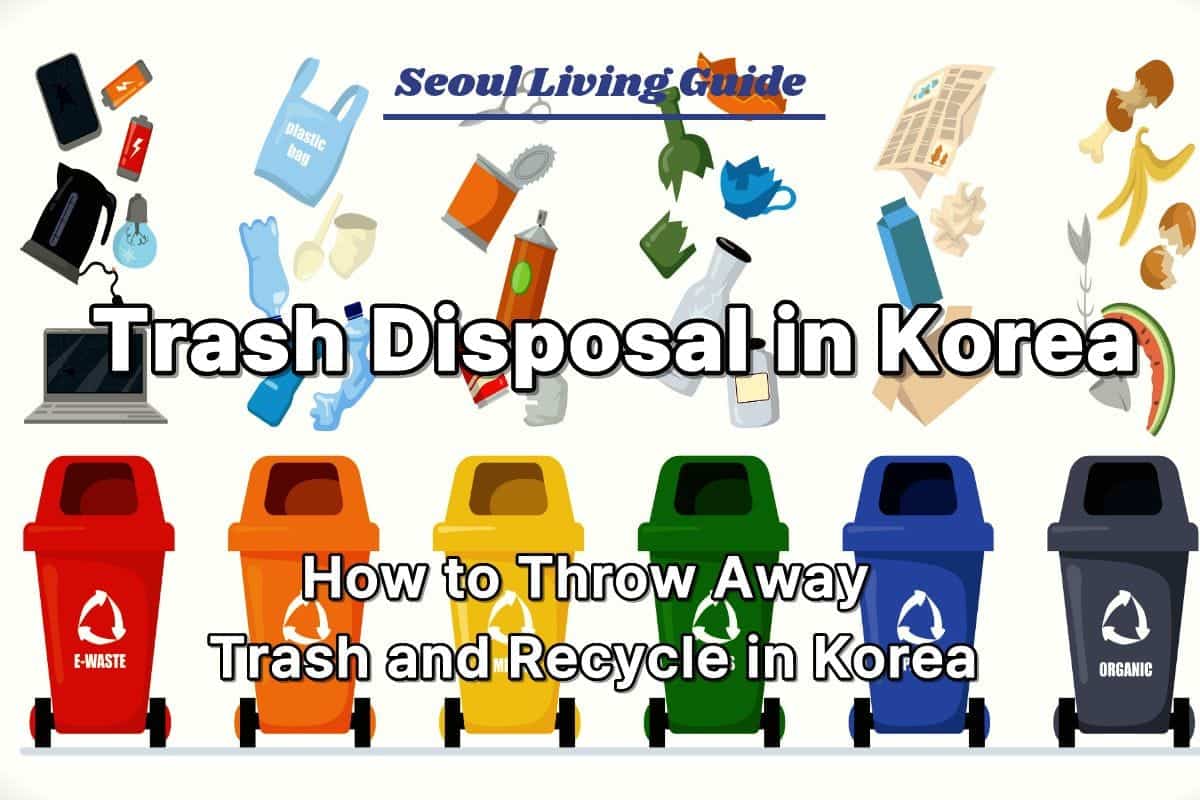
How to Throw Away Trash and Recycle in Korea
One of the most important things to understand when living in Korea is how to properly dispose of household waste. Korea has a detailed waste separation and recycling system, and the rules can be different depending on your city, district, and type of residence.
If you’re new to Korea, the system may seem complicated at first. But once you understand the basic categories, it becomes much easier.
Don’t worry — here’s a simple guide to help you sort and dispose of your household waste with confidence.
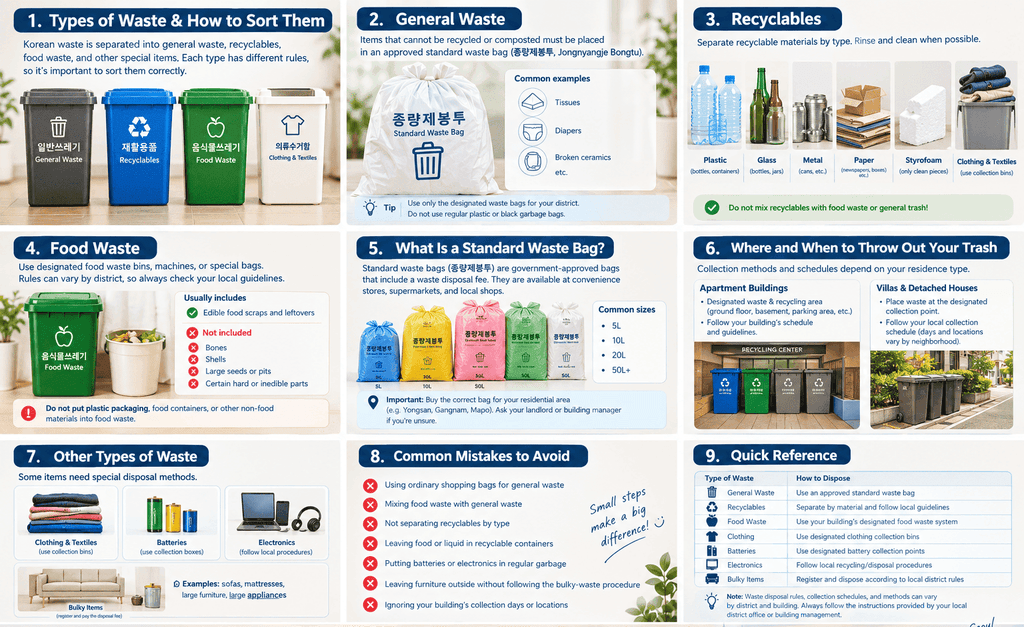
1. Types of Waste & How to Sort Them
Household waste in Korea is generally separated into general waste, recyclables, and food waste. Some items, such as clothing, batteries, electronics, and bulky furniture, may require separate disposal methods.
■ General Waste
General waste includes items that cannot be recycled or composted.
Examples include:
- Dirty tissues and paper towels
- Diapers
- Used disposable products
- Contaminated packaging
- Broken ceramics and dishes
- Other non-recyclable household waste
General waste must be placed in an approved standard waste bag (종량제봉투, jongnyangje bongtu).
✓ Tip: Do not use ordinary shopping bags or regular black garbage bags for general household waste. Use the designated waste bags required by your local district.
♻️ Recyclables
Recyclable materials should generally be separated by type rather than mixed together.
Common recyclable materials include:
Plastic
- Plastic bottles
- Containers
- Clean plastic packaging
Glass
- Glass bottles
- Glass jars
Metal
- Aluminum cans
- Steel cans
- Other recyclable metal containers
Paper
- Newspapers
- Cardboard boxes
- Paper packaging
Remove unnecessary tape and flatten cardboard boxes when possible.
Styrofoam
- Clean, recyclable Styrofoam packaging
Clothing & Textiles
- Clothing and textiles should usually be placed in designated clothing collection bins.
✓ Recycling Tip
Before recycling, empty and rinse containers when appropriate and separate different materials.
Avoid putting food-contaminated items or general household waste together with recyclable materials.
2. Food Waste
Food waste is handled separately from general household waste.
Depending on your residence and local district, food waste may be collected through:
- Designated food waste containers
- RFID food waste machines
- Special food waste bags
- Other building-specific collection systems
What Usually Goes Into Food Waste?
Food waste generally includes edible food scraps and leftovers.
However, not everything related to food belongs in the food waste category.
Items such as:
- Bones
- Shells
- Large fruit pits and seeds
- Certain hard or inedible food parts
may need to be disposed of as general waste.
Because food waste rules can vary by district, check your local guidelines or ask your building manager if you are unsure about a particular item.
📌 Important: Never put plastic packaging, food containers, or other non-food materials into food waste.
3. What Is a Standard Waste Bag?
In Korea, general household waste is normally disposed of using government-approved standard waste bags, known as:
종량제봉투 (Jongnyangje Bongtu)
These bags include a waste disposal fee in their purchase price.
They are commonly available at:
- Convenience stores
- Supermarkets
- Local shops authorized to sell waste bags
Common sizes include 5L, 10L, 20L, and larger sizes, although available sizes may vary by district.
📌 Important: Buy the Correct Bag
Standard waste bags are generally issued for specific local districts.
For example, if you live in Yongsan-gu, you should use the appropriate waste bags for your residential area rather than simply buying any bag available in Seoul.
If you have recently moved, ask your landlord, real estate agent, or building manager which type of waste bag you should purchase.
4. Where and When Should You Throw Out Your Trash?
Waste collection procedures depend on the type of residence.
🏢 Apartment Buildings
Many apartment complexes have a designated recycling and waste disposal area.
It may be located:
- On the ground floor
- In a basement area
- Near the parking area
- In a separate recycling center
Your apartment management office will usually provide information about where and when each type of waste should be disposed of.
Some apartment buildings also use RFID systems for food waste.
🏠 Villas & Detached Houses
For villas and detached houses, residents may need to place waste at a designated collection point according to the local collection schedule.
Collection days and locations vary by neighborhood, so always follow the instructions provided by your district or building.
✓ Tip: If you’re renting a villa or house, ask your landlord or real estate agent about the exact trash disposal schedule before moving in.
5. Other Types of Waste
Some household items cannot simply be placed in a standard waste bag or recycling area.
👕 Clothing
Unwanted clothing and textiles can often be placed in designated clothing collection bins.
Make sure the items are clean and suitable for collection.
🔋 Batteries
Used batteries should not be thrown into regular household waste.
Look for designated battery collection boxes, which may be available at:
- Apartment complexes
- Community centers
- Public facilities
- Recycling collection points
💻 Electronics
Small electronics may have designated collection points or recycling programs.
For larger appliances or electronic equipment, check the disposal procedure provided by your local district.
🛋️ Bulky Items
Furniture and other large household items cannot usually be left with regular garbage.
Examples include:
- Sofas
- Mattresses
- Large furniture
- Large appliances
Depending on your district, you may need to register the item for bulky-waste disposal and pay the applicable disposal fee before putting it out for collection.
6. Common Mistakes to Avoid
If you’re new to Korea, these are some of the most common waste-disposal mistakes to watch out for:
❌ Putting general waste into ordinary shopping bags
❌ Mixing food waste with general waste
❌ Throwing recyclable materials away without separating them
❌ Leaving food or liquid inside recyclable containers
❌ Putting batteries or electronics into regular garbage
❌ Leaving furniture outside without following the bulky-waste disposal procedure
❌ Ignoring your building’s designated collection days or locations
7. A Simple Waste-Sorting Checklist
When you’re not sure what to do with an item, ask yourself:
① Can it be recycled?
→ Separate it according to the appropriate recyclable category.
② Is it food waste?
→ Use your building’s designated food waste system.
③ Is it neither recyclable nor food waste?
→ Dispose of it using the appropriate standard waste bag.
④ Is it large or difficult to dispose of?
→ Check the bulky-waste disposal procedure for your district.
⑤ Still not sure?
→ Ask your building manager, landlord, or local district office.
📌 Need Help Settling Into Seoul?
Understanding waste disposal is just one of the many things you’ll need to learn when moving to Korea.
At Atrium Seoul Realty, we help international residents not only find a home in Seoul but also understand the practical details of settling into their new neighborhood.
We provide new tenants with practical guidance on waste separation, recycling, and everyday life in Seoul, helping you settle into your new home with greater confidence.
Moving to Seoul? Let us help make your transition easier.
Quick Reference
| Type of Waste | How to Dispose |
| 🗑️ General Waste | Use an approved standard waste bag |
| ♻️ Recyclables | Separate by material and follow local guidelines |
| 🍎 Food Waste | Use your building’s designated food waste system |
| 👕 Clothing | Use designated clothing collection bins |
| 🔋 Batteries | Use designated battery collection points |
| 💻 Electronics | Follow local recycling/disposal procedures |
| 🛋️ Bulky Items | Register and dispose of according to local district rules |
📌 Note: Waste disposal rules, collection schedules, and disposal methods can vary by district and building. Always follow the instructions provided by your local district office or building management.